Full Circle in a Century
Why cinema's first novelty is storytelling for our new age
You’re invited to a special screening of “The Lost World” (1925) at Chandler Museum, Friday, June 12, 2026 - 6-8pm featuring commentary by Amy DeCaussin. Scroll down for more details.
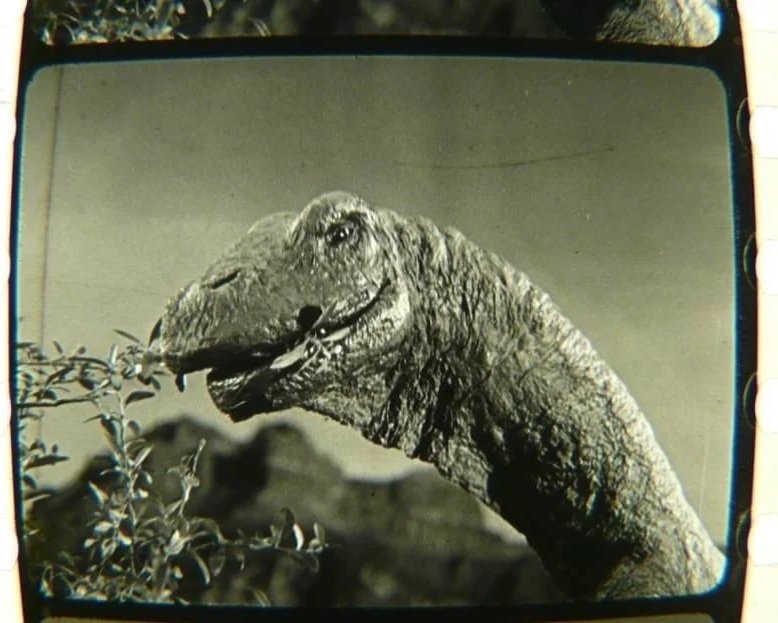
Screenshot from “The Lost World” (1925) featuring pioneering stop-motion special effects by Willis O'Brien, who later went on to make King Kong in 1933.
by Amy DeCaussin | Edited by Carly Davis
More than a century ago, audiences saw something impossible: dinosaurs moving on screen. The handmade creations by Willis O’Brien brought to life frame by painstaking frame changed how we understood what cinema could be. From that first flicker, stop-motion animation emerged as a captivating novelty.
Today, our experience with AI and rapidly evolving technology echoes the awe of those early moviegoers. This time, however, innovation is accelerating at a pace that leaves us searching for something to hold onto. Our renewed hunger for handcraft is both a response, and perhaps a remedy.
When images can be generated in seconds, the slow, tactile, and irreducibly human process of stop-motion animation becomes a radical act. Thus, we find ourselves at a full-circle moment, as stop-motion gains increasing momentum in storytelling for a new age.
Friday, June 12, 2026 | 6-8pm
Chandler Museum
Grab some friends and come down to Chandler, Arizona for a special screening of “The Lost World,” a 1925 American silent fantasy and adventure film adapted from Arthur Conan Doyle's 1912 novel of the same name.
Featured Speaker: Amy DeCaussin
Amy DeCaussin—animator, illustrator, and storyteller invites you behind the scenes of her craft, illuminating the patience and joy at the heart of stop-motion. A lively, all-ages look at where this art form has been, where it's going, and why it matters more than ever.
Event is FREE